
Opening day all over again
On inheritance, rivalry, and the need for a loyal opposition
Please consider supporting The Front Page with a paid subscription: HERE
By AARON WOOLF
It’s midday. I’m trying to work. But it’s hard to concentrate.
In less than two hours, the Baltimore Orioles will take the field at Camden Yards and with them, the hope of a new season, a new spring, a better future. And a kind of fandom I’ve carried, sometimes through lonely decades of losses, since I was a very small child.
I remember sleeping with a transistor radio under my pillow, the volume turned down to a whisper only I could hear. The signal would drift — static, then the voice returning, steady and familiar, like someone keeping watch through the night. I don’t remember every player or every inning. What I remember is the feeling that the game was always there, unfolding somewhere just beyond the edge of sleep.
Today we play the Twins, perhaps the team I like most after Baltimore, now that the Expos are gone. But if things go as they should, as they must, we will be ready for the most important marker of the early season, when we roll into Yankee Stadium on May 1st.
You may have heard of a certain rivalry between the Red Sox and the Yankees, but for me it was always the Yanks vs. the O’s.
My prejudices did not originate with me.
My father, who grew up in Brooklyn, taught me to distrust the New York Yankees before he taught me much else I can remember. It wasn’t explained so much as absorbed — a tone, a posture, a quiet certainty about who we were and who we were not. His grievance was older than mine. The departure of his childhood Dodgers left something unresolved, a civic wound that never quite healed.
And somehow, in the strange arithmetic of American sports, that loss bent toward Baltimore.
I’ve often wondered if he saw something in the Baltimore Orioles of the 1960s —some echo of ‘Dem Bums of his youth. For me, the O’s were simply ascendant: a young team shocking the baseball world, sweeping the glitzy, unrecognizable LA Dodgers in ’66 and returning again and again in those years that followed.
O those heroes.
Brooks Robinson at third, turning defense into something like art. Paul Blair in center, covering impossible ground. Frank Robinson — power and grace in equal measure. And Earl Weaver in the dugout, building a philosophy out of patience, probability, and the occasional eruption.
They called it the Oriole Way. To a child, it felt less like a system than a set of values.
Play clean. Play smart. Don’t give anything away.
And then there was Mark Belanger.
He never hit much above .220. He bunted, moved runners along, did the small things that don’t survive well in memory. And he smoked in the dugout. For Christ’s sake. He died of lung cancer, which feels, in retrospect, like a brutal symmetry.
But on the field, he got to everything.
No theatrics. Just range — left, right, up the middle. The ball was hit, and then it was in his glove, and then it was gone again.
Out.
That was the job.
Today, no shortstop is allowed to live that close to the Mendoza line. No one is asked to bunt that often. And certainly no one is lighting up in the dugout. The game has refined itself, optimized itself, turned toward power and metrics that would have rendered a player like Belanger almost invisible.
And yet, as a teacher of the game, of the lauded fundamentals, he may have been the best I ever saw.
The heart of Orioles baseball still feels authentic in a way that resists definition. You hear it echoed in fans of the Minnesota Twins, the Milwaukee Brewers, the Cleveland Guardians. It lives in the expectation that the game will be played without adornment.
If there is an antithesis, it lies in the Bronx.
In the New York Yankees — a franchise that has come to represent not just excellence, but inevitability.
And yet even that is not the whole story.
Because the irony, if you look long enough, is that the Yankees themselves began as something much closer to what they now stand apart from. Before the Bronx, before the mythology, they were the New York Highlanders, a franchise that had moved north from Baltimore, from an earlier incarnation of the Orioles.
As a New York Times writer once observed of this more Shakespearean rivalry, the reason the contest between these teams has always carried such force is that the New York Yankees, in some deeper sense, are the Baltimore Orioles.
And even their greatest icon, Babe Ruth, began as a rough-edged kid out of Baltimore, remade into something larger than life.
The Yankees don’t just oppose Baltimore. They contain it.
Which suggests that what we are really talking about is not teams, exactly, but transformations, the way a rivalry, at its heart, is a relationship. The way a club, a city, a culture shifts from something local and contingent into something larger, more permanent-seeming.
The way I, still crowing about 1970, married a Yankees fan. And fathered another. And the way I cried when the Yankees lost that heartrending 2001 series in the bottom of the ninth, just weeks after 9/11 — their heartbreak felt my own.
The Yankees will always be the other for me. But behind the boos and the Bronx cheers is a quiet understanding that we need each other. We need an opposition to define ourselves — one that is loyal, bound by a shared faith in the game itself.
We have lost that in our politics. But it is still there on the diamond.
And every opening day, our hearts beat a little faster.
As Bart Giamatti wrote, baseball lives in the “green fields of the mind,” where it renews itself each spring.
And so here we are again.
By the time you read this, these first games will have been played, hell, the Yanks already smashed the Giants, their other old NYC rivals.
The Orioles will have faced down the Twins and the endless micro-stats of the games will be flowing into my inbox and consciousness to be tabulated for evidence of hope and despair.
But none of that has started just yet. For this Orioles fan, it’s still just a great green field of wishes.
And at a moment when so much else feels as though it is coming undone, there is still baseball, still this scrappy, promising thing, returning not with certainty, but with insistence.
Like something pushing up through the last cold ground.
A brave little black-and-orange crocus.
Promising, promising, promising that there is something yet to hold onto.
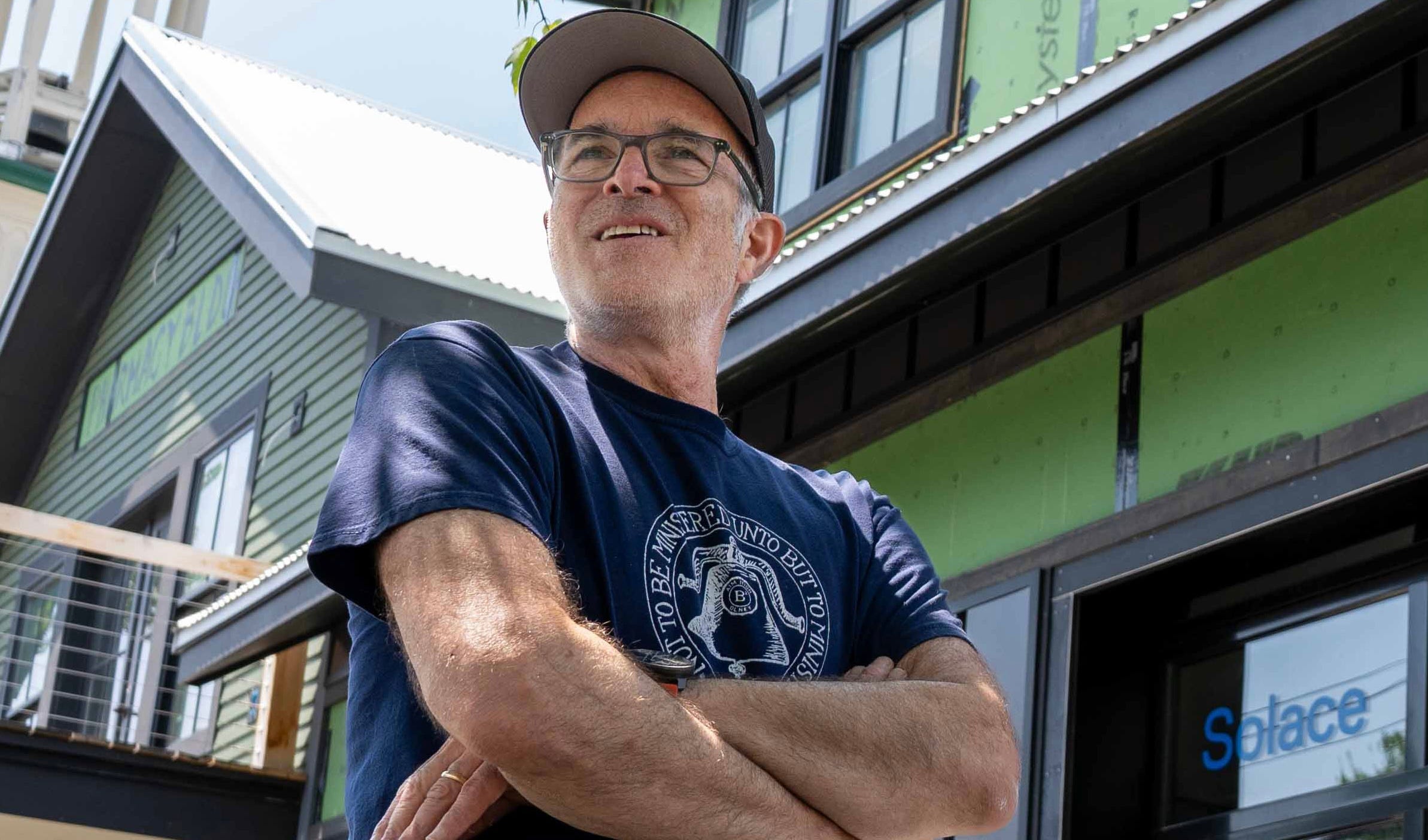
Aaron Woolf is a filmmaker and community developer based in Elizabethtown, New York. Best known for directing the Peabody Award–winning documentary King Corn, he has also been deeply involved in local projects that strengthen Adirondack communities. His work includes reopening the historic Deer’s Head Inn, serving on the town planning board, helping to found the Adirondack Community Recreation Alliance, and leading the redevelopment of Elizabethtown’s historic pharmacy building into a multi-use center promoting small businesses and community life.
Climate speaker
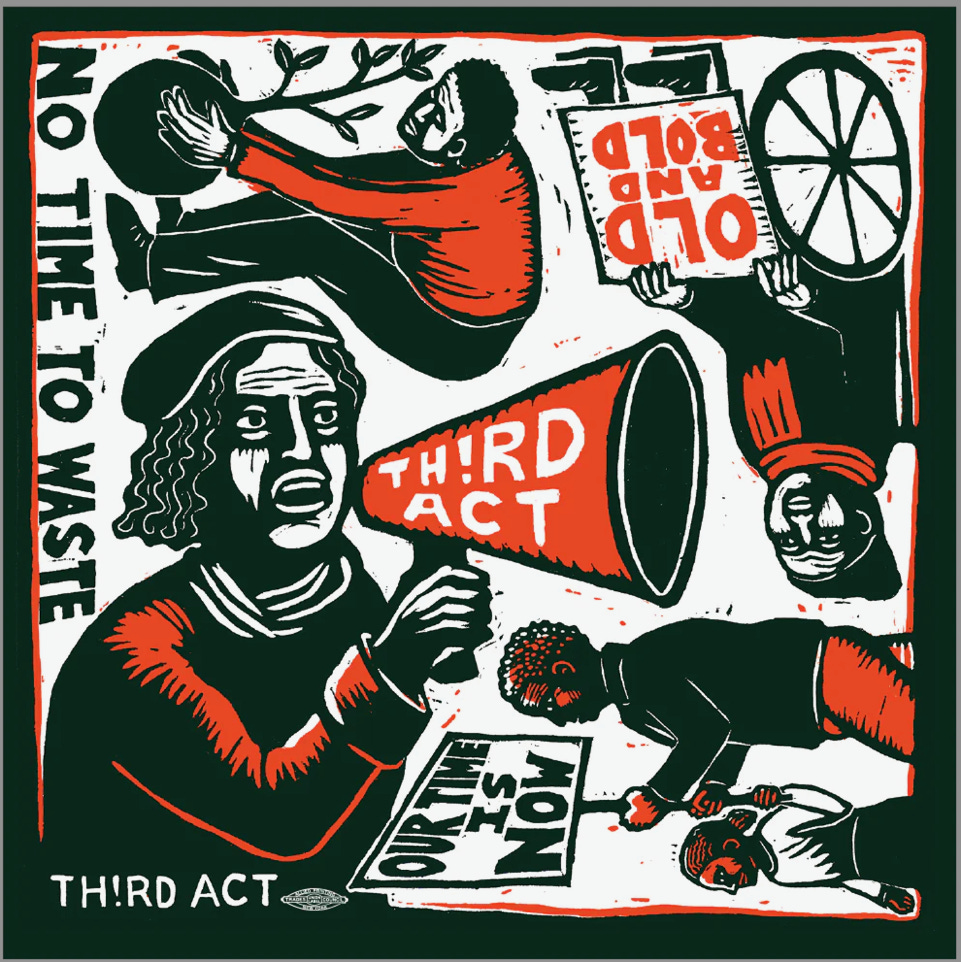
Bill McKibben’s Third Act campaign manager, Michael Richardson, an organic farmer, solar heating contractor, labor economist, county legislator and municipal consultant, is coming to Crandall library in Glens Falls on Sunday from 2 to 4 p.m. to speak about the connection between the fight for our democracy and climate action.
He will be talking about the present possible rollback of the state’s climate law, to be announced with the next state budget April 1, about the state of renewable energy and the grid upstate and about the intersection of such actions as No Kings and the Wednesday climate rally and why it is important to keep our eye on the ball re: climate action right now.
Join Third Act at its next chapter meeting, this Sunday (music starts at 1:30 p.m.), and on Zoom.
Be sure to bring your No Kings Day signs, to celebrate the success of the No Kings actions! A group picture will be taken at the end of the meeting.
Enjoyed your O’s story. Many of us have baseball stories to tell in a world full of people with baseball stories to tell.
Go, Bosox!⚾️
Thanks for this reflection on the “National Pastime“ and the quote from professor and Baseball Commissioner Bart Giamatti.